
Spark joy and part with all those old statements, tax returns, and utility bills.
You just watched the show with that organizing consultant who helps people de-clutter their lives. It’s inspiring seeing others go through closets and part with useless stuff they’ve unnecessarily hung onto for years.
You shut off the TV and head into the home office to check your email right before bed. Piles of unopened envelopes fill the desktop. Drawers are full of old paperwork. There’s no rhyme or reason to how it’s all stuffed in there. Suddenly, it dawns on you. Disorganized financial papers may be just as worthy of a life-changing de-cluttering project as cleaning out a messy basement.
Here are some simple steps to get started.
1. Say Goodbye
The problem is many of us don’t equate holding onto financial paperwork with untidiness. We think it’s important stuff we’ll need at some point. But truthfully, most of it’s really not worth keeping. If anything, it may be costing you time (looking through all your stuff) and money (when late bills and fees incur because of forgotten envelopes in that pile). You have to learn to say goodbye and discard.
Say farewell to ATM receipts after checking your bank statement. When a bill payment clears or you decide to hang onto a purchase, it’s time to part ways with statements or sales receipts, too. Unless it’s needed at tax time, as proof of value for insurance in the event of loss or damage, or for a warranty, it’s probably time to get rid of it once it’s been used. (If needed for a tax deduction, hold on to it for at least three years).
2. Learn What to Keep
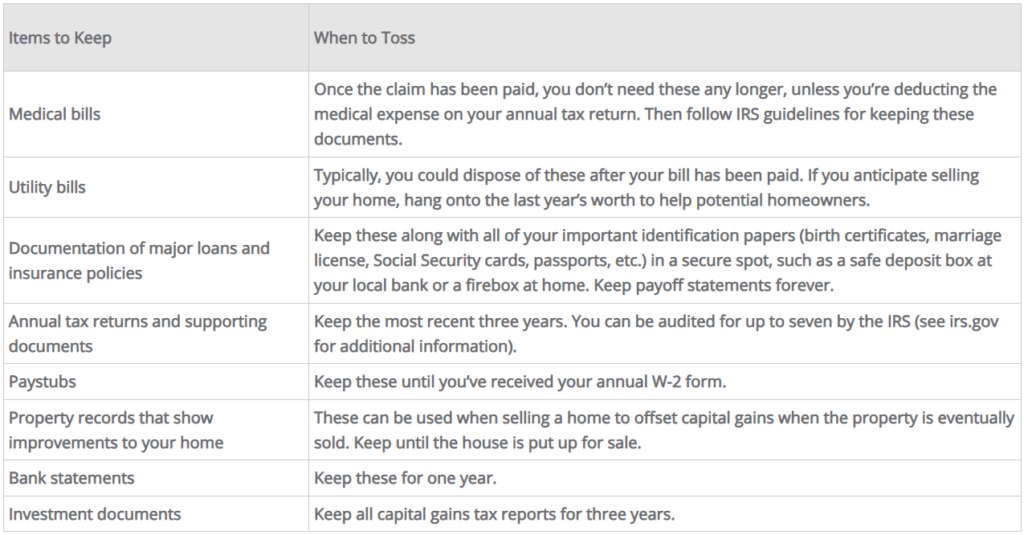
Here’s what you need to hang onto and for how long:
3. Make a Shredder Your Best Friend
Invest in a quality paper shredder or get the okay to use one at the office. Shredding is key when getting rid of old documents. If it’s going away, it needs to be shredded to prevent anyone from acquiring any personal information about you. Recycle what’s left.
For the important stuff that remains, develop an easy-to-follow filing system that you’ll actually use. Invest in colored folders with tabs and a label maker if you don’t already own them. Categorize, label, and keep them in a drawer or filing cabinet.
4. Switch to Digital
Going digital with your statements and paychecks can help solve a lot of problems. Almost every bank, credit-card company, investment company, and employer now offers a paper-free option. Take them up on this and switch to paperless delivery.
Although opting in to e-delivery helps prevent additional physical clutter, you may still have a big mess on your hands in time. This one will just be on your computer. So, make sure you employ the same thinking there as with your desk. Keep it clean and organized. Regularly go through your emails and purge the ones that are no longer relevant.
5. Get Started Now
Make upkeep a normal routine. Play some music to get in the mindset for firing up that shredder. The longer you wait to tackle that mess, the bigger that mountain of paper will grow.
Having your own organizing consultant can help in the undertaking. Luckily, you have one already. Talk with your financial professional about other methods of dealing with your financial clutter. Together, you can develop a strategy of what you should hang on to and what you can find joy in parting with forever.
Authored by Hartford Funds, LLC, Member FINRA